
Tata Power has partnered with Salesforce to digitally transform its rooftop solar, EV charging, and smart home solutions businesses, aiming to enhance customer engagement and operational efficiency.

Shares of electric vehicle (EV) maker Ola Electric Mobility fell nearly 7 per cent to a fresh low on Monday after its revenue growth in the third quarter (October-December/Q3) of 2025-26 (FY26) slowed, with analysts warning that any turnaround could be prolonged.
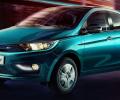
Tata Motors on Wednesday unveiled Tigor EV, its second electric model in the personal mobility space after Nexon EV. The auto major has tasted success with Nexon EV, which currently commands about 70 per cent market share in the domestic electric vehicle segment. The Tigor EV comes powered by the company's high voltage electric architecture - Ziptron - and has been developed based on three pillars of technology, comfort and safety.

The Ministry of Heavy Industries has approved 11 electric vehicle (EV) manufacturers, including Ather Energy, Bajaj Auto, Hero MotoCorp, Ola Electric, and Mahindra, to receive incentives under the recently introduced Electric Mobility Promotion Scheme (EMPS) 2024. "A total of 11 firms have been granted approval under the EMPS, with several more under consideration," informed a senior official of the ministry to Business Standard. The scheme aims to sustain the growth in EV sales, replacing the Faster Adoption and Manufacturing of Electric Vehicles - II (FAME-II) scheme.

Renault India has launched the all-new Renault Duster, featuring a turbo petrol engine and advanced features, with dispatches underway nationwide.

Tata Motors Passenger Vehicles (TMPV) on Friday reported a 13 per cent year-on-year (Y-o-Y) decline in consolidated revenue from operations for the second quarter of 2025-26 (Q2FY26), largely due to the cyberattack on its subsidiary Jaguar Land Rover (JLR) in late August that forced a shutdown of its manufacturing operations for over five weeks.

'We expect this festival buying spirit to continue in October as well, with upcoming festivities including Dhanteras and Diwali, which traditionally witness spirited buying from customers.'

GSM, which is potentially eyeing a Hong Kong listing and was recently valued at $20 billion, operates on a distinct model -- it owns the e-taxis and employs the drivers, while also supplying cars to independent drivers or fleet operators.

Network scale seen as central to tapping smaller markets.
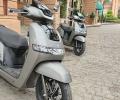
'Price competition is fierce, with many companies selling at zero margin.' 'This pricing pressure is challenging smaller companies and will likely drive some out of the market over time.'

India's electric two-wheeler (e2W) manufacturers have urged the government to extend subsidies under the PM E-Drive (Electric Drive Revolution in Innovative Vehicle Enhancement) scheme beyond March 2026, cautioning that a withdrawal could slow near-term demand even as confidence in long-term electric mobility adoption remains intact.
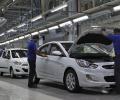
Top carmakers led by Maruti Suzuki, Mahindra & Mahindra, Tata Motors Passenger Vehicles and Kia India on Saturday reported record sales in the domestic market riding on festive demand boosted by GST rate cut. Other manufacturers such as Skoda Auto India and Toyota Kirloskar Motor also posted impressive growth in sales in October.

Coforge's planned $2.35 billion all-stock acquisition of US-based Encora has divided the Street, with a few brokerages terming it a "strategically positive" but execution-heavy bet while others raising valuation concerns.

Automobile retail sales across the domestic market witnessed a 21 per cent year-on-year increase in the 42-day festive season led by record registrations of passenger vehicles and two-wheelers aided by GST rejig enabled drop in prices across segments, dealer' body FADA said on Friday.

The fiscal tilt towards capex benefits companies in investment-related sectors like capital goods, defence equipment, engineering & construction and metal & mining. The planned cut in revenue expenditure will weigh on companies in consumption sectors like FMCG, consumer durables and retail.

Bajaj Auto is planning a slow, calibrated push to take the Chetak, its electric scooter, to more than 100 countries on the strength of its distributor network and market-specific localisation rather than an aggressive global rollout, reports Sohini Das.
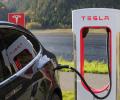
BMW Group India is unfazed by the prospect of Tesla entering the electric vehicle market here and feels it will help grow the segment, according to its Managing Director and CEO Vikram Pawah. The group, which sold a total of 1,249 units of electric cars in India across two brands -- BMW and MINI -- has already sold 646 units in the first quarter of 2025 and is keeping its forecast of 15 per cent of its total sales in India coming from EVs, Pawah told PTI in an interview.

Tata Motors is hoping to beat its target year of 2030 and have 30 per cent of its portfolio comprising electric vehicles (EVs), according to Chairman N Chandrasekaran, who was speaking at the company's last annual general meeting (AGM) ahead if its demerger.

German luxury carmaker Mercedes-Benz is considering assembling more electric vehicles at its plant in India not merely to gain cost advantage but also to meet its zero emission mobility and carbon neutral setup goals, according to a senior company official. Mercedes-Benz India, which currently assembles its flagship electric luxury sedan EQS at its Chakan unit, is considering localisation of other models depending on demand.

Starting January, the market is expected to welcome models like the Tata Punch 2025 which is expected to be around 6 lakh, Mahindra BE 07 EV around 29 lakh, Maruti WagonR Electric around 8.5 lakh, Toyota 3-Row SUV around 14 lakh, and Volkswagen Tera to be around 8 lakh.

There is record underperformance and under-ownership. Some of this is cyclical and will turn on its own. However, we also need to regain our growth credentials. For this, both the government and companies have a role to play, as do investors, points out Akash Prakash.
The share of EVs in the luxury segment rose from 7 per cent in January-May 2024 to 11 per cent during the same period in 2025, marking a 66 per cent growth in the electric luxury segment.
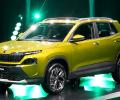
Skoda Auto India, the Czech carmaker that has recently found success with its compact SUV Kylaq, says it remains committed to developing a fully localised electric vehicle (EV). The EV will be manufactured at its Chakan facility for both Indian market and exports.

The demand for passenger vehicles (PVs) is expected to sustain even beyond the ongoing festival season as a new set of customers, those who gained confidence to buy cars following the recent GST rate cuts, will begin to visit dealerships now, said Shailesh Chandra, president of the Society of Indian Automobile Manufacturers (Siam), on Wednesday.

The company has the largest car park in EVs in India, estimated to be around 170,000 units. As a pilot, it has already started work with used online car marketplace Spinny.

Skoda India sees growth in automatics and network expansion as key drivers to reach 3 per cent market share, with EV plans and a new SUV also in the works.
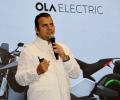
Why has the shift from ICE to electric slowed down despite initial enthusiasm?

With nearly 100 launches and unveils, the Bharat Mobility Global Expo 2025, held in Delhi from January 17 to 22, made one thing clear to automobile enthusiasts: Electric vehicles (EVs) are the way ahead for the Indian auto market for years to come.
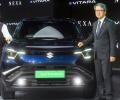
MSIL, which currently has a subscription service that allows customers to lease its petrol-run and strong hybrid vehicles on a flexible, long-term basis without ownership commitments, will introduce a leasing service as well.
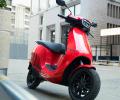
Ola Electric, India's largest electric vehicle company, has achieved a significant milestone by becoming the first two-wheeler automotive electric vehicle (EV) manufacturer in India to receive incentives under the Production Linked Incentive (PLI) Scheme for Automotive and Auto Component (PLI-Auto Scheme). The company has been granted a total incentive of Rs 73.74 crore for the Determined Sales Value of FY 2023-24 under the scheme, according to a stock exchange filing by the company.

Czech carmaker Skoda plans to bring more of its global nameplates into the Indian market as it looks to cater to a diverse set of customers, according to a senior company executive. The company, which now sells products in India ranging from over Rs 7 lakh to upwards of Rs 40 lakh, however, has no immediate plans to introduce electric cars in the country.

Tata Motors on Tuesday said its electric vehicle arm has reduced prices of two models -- Nexon.ev and Tiago.ev -- by up to Rs 1.2 lakh on account of reduction in battery cost. The auto major has cut the price of Nexon.ev by up to Rs 1.2 lakh and now the model price starts at Rs 14.49 lakh. Similarly, the company has reduced the prices of Tiago.ev by up to Rs 70,000 with the base model now starting at Rs 7.99 lakh, Tata Motors said in a statement.
Tata Motors is the leader in the electric car market with about 62 per cent share.

The tariff removal will lower prices of Harley's large-displacement imported motorcycles, which retail between 14.5 lakh and 45.8 lakh but after the duty cut volumes are expected to remain modest.

'Currently, EVs are about 30-50 per cent more expensive than ICE vehicles. I believe the inflection point for EVs will come when this price gap narrows to 20-25 per cent. That's when people will start coming in.'

Auto majors Maruti Suzuki, Tata Motors and Mahindra & Mahindra reported robust sales in September as reduced price tags owing to GST rationalisation led to record demand in the Navaratri period. The month also saw Tata Motors and Mahindra & Mahindra settling at number two and three positions, respectively in vehicle wholesales ahead of Hyundai Motor India.
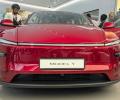
In September, Tesla and VinFast accounted for less than 0.5 per cent of all EV registrations.

'Given that the population is almost evenly split, the Indian economy cannot grow without women participating in the workforce.' 'While women's participation has increased, it is still well below 40 per cent,' says Kartik Narayan, CEO of the professional networking and jobs platform, Apna.

The Centre has notified the Scheme to Promote Manufacturing of Sintered Rare Earth Permanent Magnet (REPM) with an outlay of Rs 7,280 crore. The initiative is targeting to reduce dependence on China for critical inputs and secure supply chains for EVs, electronics, aerospace and green energy.
Tata Motors plans to set up separate sales network for its electric passenger vehicles in current fiscal year as it looks to give differentiated experience to the buyers opting for the environment-friendly models, according to a top company official. The Mumbai-based auto major, which on Thursday introduced all-new versions of its Nexon EV and Nexon (internal combustion engine), said it will start experimenting with new outlets in some of the cities where EV volumes have gone up. "We'll have to separate them (sales outlets for EVs and ICE) given that we have different requirements of customers and also a growing portfolio (of EVs)" Tata Motors Passenger Vehicles managing director Shailesh Chandra told PTI in an interaction.
